
Introduction
To start the conversation off – I have not played other Armored Core games. I am a huge fan of From Software’s other titles, from Dark Souls onwards at least, so now I needed no excuse to check out their latest offering.
Armored Core (which I reluctantly have to spell without a ‘u’) is simply a mech-lover’s dream. Whilst I don’t love all things mecha, I did grow up watching shows like Zoids and Medabots, which both lend themselves to the main draw of AC6. This, combined with the fact we are still longing for a sequel to Zone of the Enders 2, heck, AC6 basically is that game, just there are no literal ‘cockpits’. All in all, the world of video games is starved for mechanical combat action, movies at least had Pacific Rim to quench this thirst, but in the games space, we’ve had nothing of consequence.
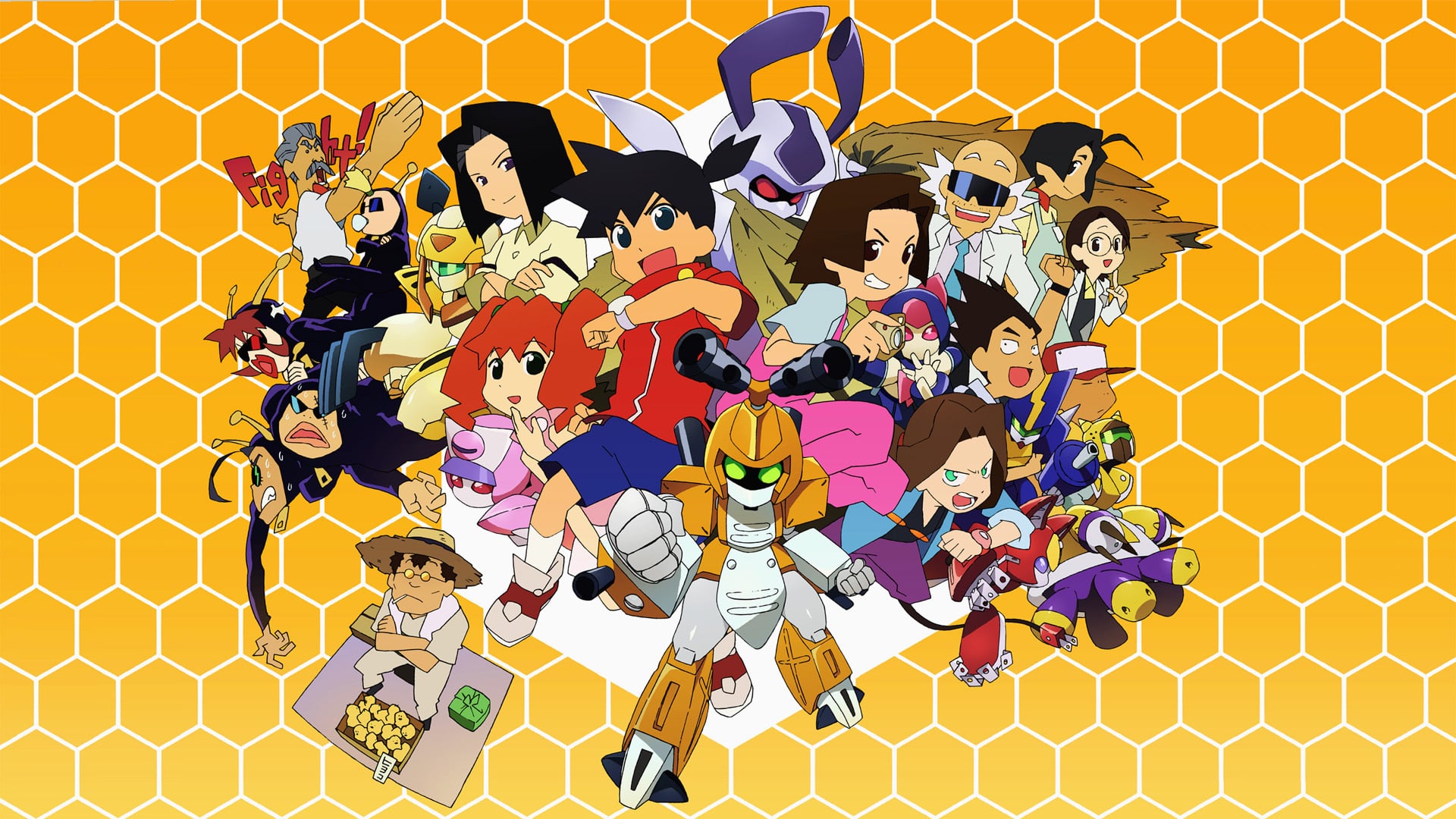
All that being said, should you jump in here if you have an affinity for any of the IP I have mentioned above? The short answer is yes, do it.
Customisation
Externals
The first thing I was excited to jump into was building my own ‘AC’. If you are into the customisation aspect, you are going to have a whale of a time here, I know I sure did. Of course being the weab I am I made one of my robots purple and green to resemble EVA-01 from Evangelion Neon Genesis. I’m sure everyone did that, and people have made even weirder and wackier stuff online; I’ve seen tanks which look like Peter Griffin, robot Pikachus, killer microwaves, not to mention odes to other iconic mechs such the Unicorn from Gundam, the list goes on.
Externally, you can choose from a range of heads, arms, bodies, legs, and perhaps most importantly, weapons. With each element being able to be individually painted to suit your specific vision, customising in Armored Core is all the fun of a Gundam model kit, without the need for surgeon-level dexterity. Each element, aside from the paint, has weight and armour stats which need to be balanced with the correct legs and arms – you can’t have scrawny legs holding up a tank. Equally, it would be inefficient to utilise tank treads to prop up a lightweight AC.
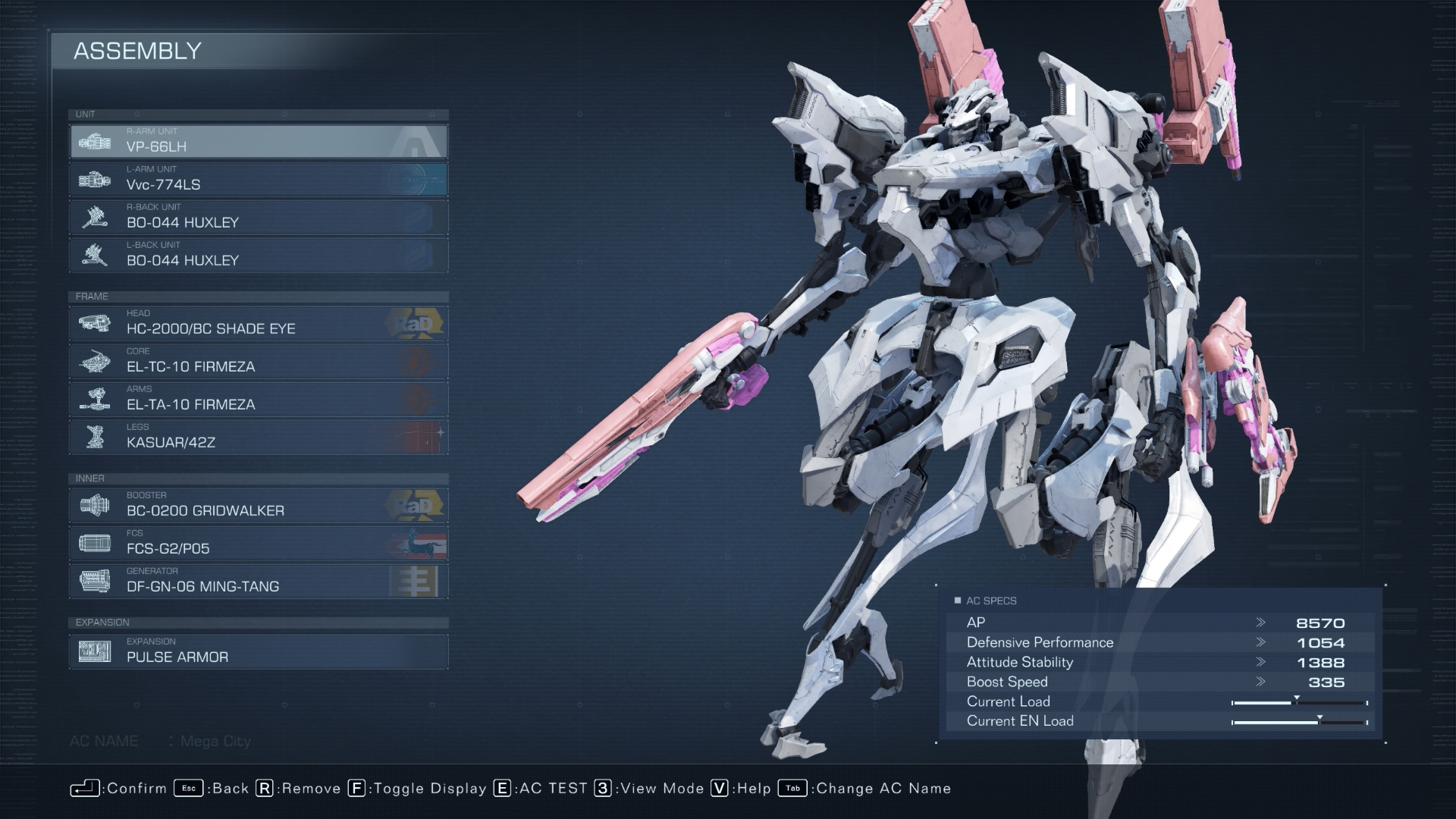
The fact there is flexibility to make so many unique machines is a credit to the robust tool set From Software have put together here. From Software also allow you to tinker with the minute details like the weathering on the hull of your robot and even uploading custom graphics to plaster on the side, granting the opportunity to make all manner of heinous death machines. It all allows for a considerable amount of creative freedom for those willing to indulge. Whatever fantasy you may have for your perfect war machine, you can likely achieve it with the robust tool set From Software have put together here.
Now, at risk of sounding like a spoilt brat, I do think of one game which could have had some inspiration taken from it to blow AC6 to the next level. That game is Need for Speed: Carbon. I would’ve loved some sliders for each of the elements to accentuate or negate some of the finer curves and vents of each body part. From Software is no stranger to this either, look no further than some of the abominations players use to traverse The Lands Between in Elden Ring. If this was an option, I’m sure I would have spent even more time in these customisation menus, maybe that is something that can get added in for the sequel.
Internals
It isn’t just the aesthetics of the AC which you have to consider though, you need to decide how this craft will actually function. Not only do you have to consider whether your legs can hold your machine upright and ensure that the arms are able to hold your equipped weapons, but also the internals. This is where Armored Core be a little less accessible – there are so many sliders and moving values as you swap batteries, cores, generators, thrusters and alike in and out it can be overwhelming. Once you get a handle for which numbers matter most, you can make much more informed decisions and feel like a mad professor as you “Frankenstein” together a bright pink killing machine.
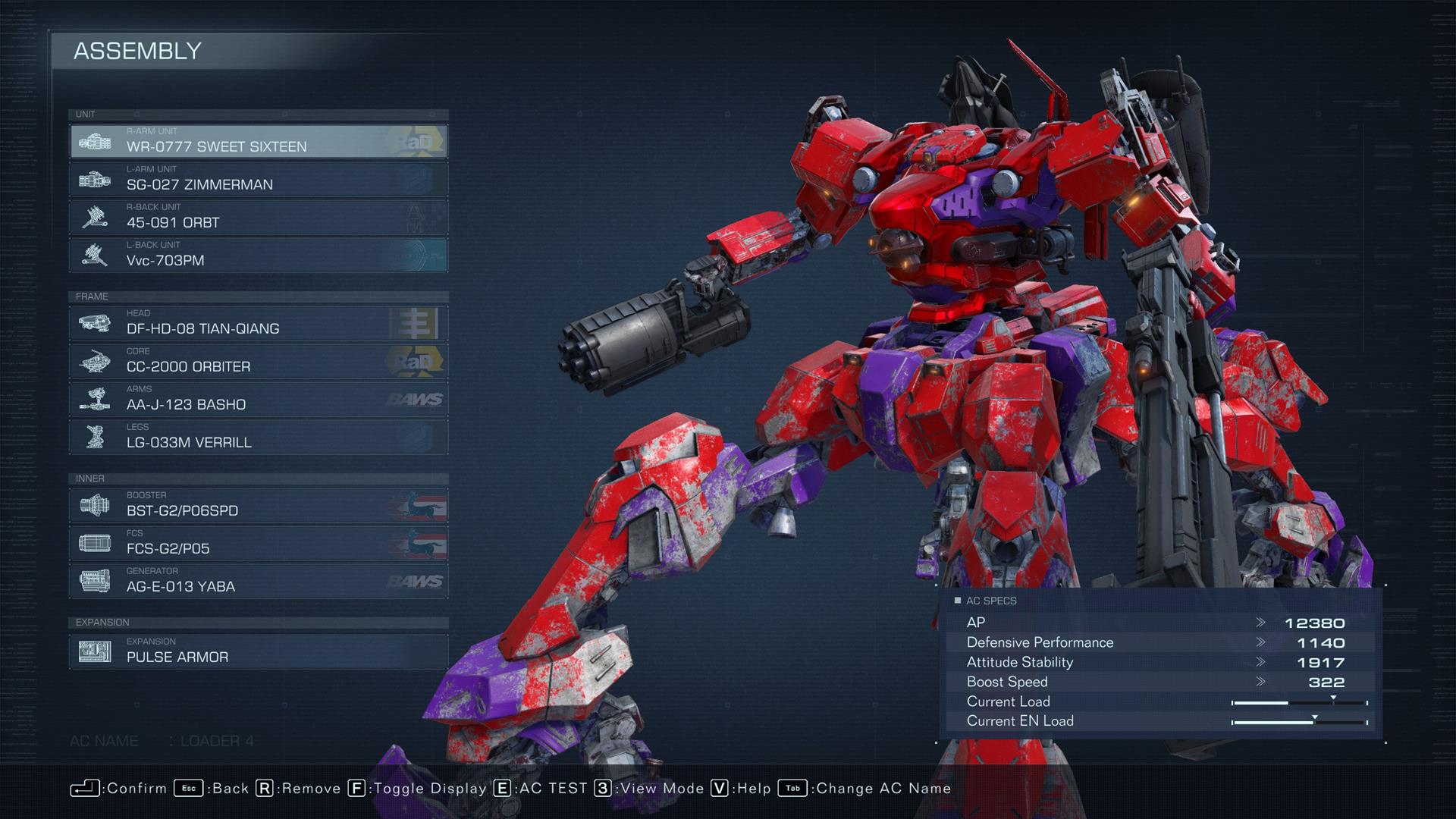
You may need to spend some time reading or watching some guides to understand the basics, but once you do, creating and customising your AC is not only part of the fun, it is a considerable chunk of it. It would not be a stretch to say that most of my time playing Armored Core was not engaging in the lightning fast action, but rather tinkering with sliders to get the most output from my thrusters with the heaviest generator I could get in there. To be clear, that is my idea of a good time. I never really understood Football Manager, but I think this is the same sensation, let me know in the comments if this is the case.
Thankfully the tutorial missions give you a good understanding of the different AC types you might want to build. Providing you with short missions like this highlights the main strengths and weaknesses of each build. This gives you a direction to what you enjoy most, be it raining death from above in a quadruped build, or piloting a more agile mech, getting up-close-and-personal with melee weapons.

Worth noting that there are some “broken” builds. Whether these are a problem or not is really down to what kind of a person you are; if you’re sticking solely to the single player aspect, you can just choose not to use them. Equally, if you’re getting stuck on some bosses, strap on the double shotguns and breeze through to the next mission. I can see this being a problem in multiplayer, but I don’t care all that much for it, so it doesn’t harm my enjoyment of the game.
Mission structure & story
After playing Elden Ring, short and mission structured campaign is exactly what I need – not many games in the current gen take this approach and in this regard it almost felt like a PS2 game, which I very much enjoyed. In recent memory you have games like Devil May Cry 5 and HiFi Rush, there’s no need to be epic, let me jump into a specific area and beat up some robots.
It’s almost narratively perfect too. You play as “621”, an augmented human mercenary (whatever that means), seemingly with one singular purpose – scoop up rewards from the “mission accomplished” screen. Obviously there are more grandiose machinations at play, but as with any From Software title, you can choose to ignore these if you wish. These larger themes include your usual sci fi tropes, like, a powerful yet lucrative resource fought over by mega corporations when acquired leads to unethical consequences. It’s kinda like Avatar.
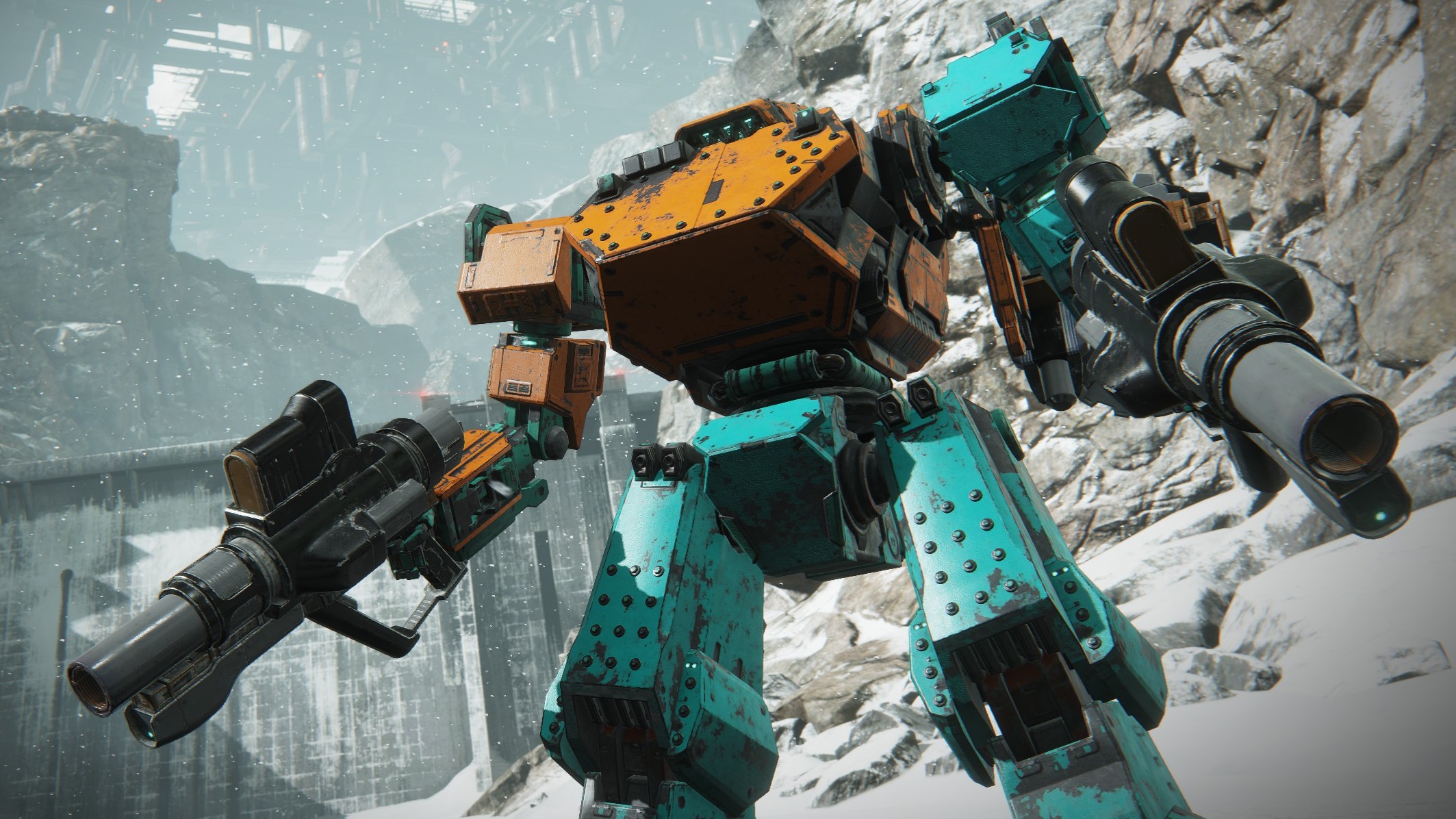
On top of the campaign missions, you swiftly gain access to ‘the arena’. This is the combat league for all the ACs and mercenaries currently working on Rubicon. At certain points in the story you will gain access to higher ranked adversaries and blasting through these earns you copious rewards, as well as the title of number one mech pilot. Fighting through these is a lot of fun, seeing the AC designs (all of which are achievable for you to pilot with the customisation) is awesome. This whole portion of the game honestly makes you feel like a child, smashing two action figures together and making ‘pew pew, kachow’ noises as you do so. To be clear, that is a good thing.
Action & gameplay
The action of AC6 is fast and frantic, not unlike Zone of the Enders, if you have build your mech specifically ro replicate this. Be warned however, boosting all over the shop can make for some wonky camera movement and in typical From Software fashion, the camera itself is sometimes the toughest boss. My partner actually enquired as to whether I got travel sick playing this game (on account of my frequent seasickness). The answer, thankfully, is no. It doesn’t have to be quite this fast though, you can slow the pace by building a slower mech with higher armour stats and heavier weaponry. It is completely up to you, and how you want to tackle the current situation.
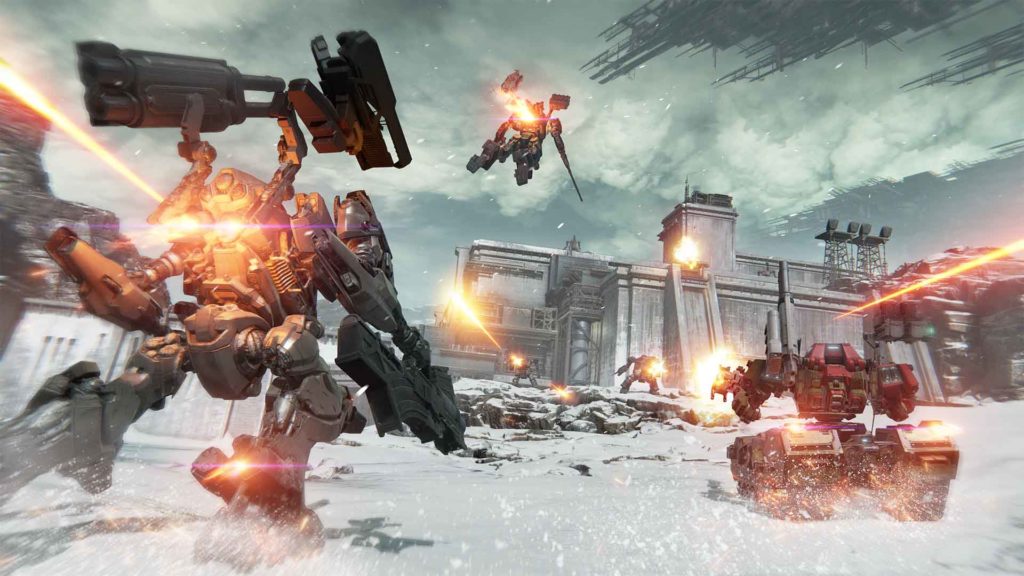
Regardless of which weapons you have equipped, the controls remain consistent and simple, allowing you to easily switch between loadouts without much loss of muscle memory. You have four weapons at a time, two in your hands and two on your shoulders, with each being fires by the corresponding back button. Combined with the need to constantly boost, jump and move using other buttons on the controller, it can feel strange at first, with some hand-cramp creeping in if you are partial to such things. Once you get into a rhythm though, you can focus more on the gameplay and playing defensive, rather than concentrating on how to acquire missile-lock and fire your machine guns at the same time. When you first start out, it really does feel like you’re wrangling a mechanical bull, but don’t worry, you’ll become an iron rancher in no time.
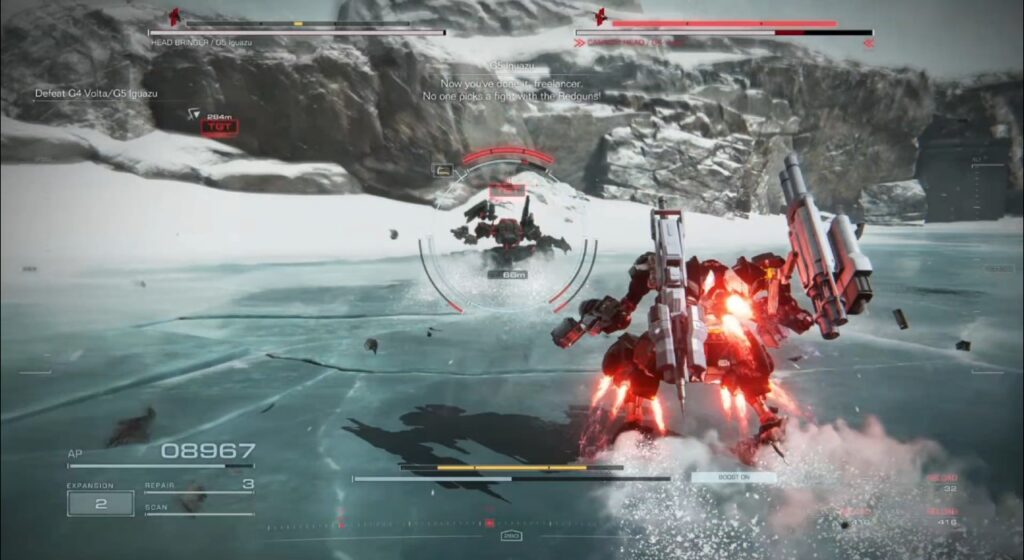
Similar to Sekiro, Armored Core 6’s combat is based around a stagger meter (this time called ACS, or armored core strain), if you can break an foe’s stance like this, they will remain still for a time, with severely weakened defences, allowing you to inflict huge damage. It was a trusty strategy for me to whittle down any enemies’ stagger using my light machine guns, then, once they were defenceless, launch literally 20 missiles at them from my shoulder canons. It seems to work in most situations, and was never dissatisfying to see my swarm of projectiles light up my opponent. This might feel a little cheap and exploitable, however, the same can happen to you, especially if your AC is lighter, thus more easily poise-broken.
Evasion and movement feels consistently snappy. This allows you to duck and weave between missile barrages and plasma canon fire with ease. The enemy attack patterns and move sets do allow the dodge to become so useful that you rarely have to think in what direction you need to thrust towards. Boss fights are not as calculated as other From Software titles. It was unlikely that spamming the dodge would not get me out of a jam. This isn’t necessarily a criticism, I enjoyed that I did not have to learn a new round of Simon every time I encountered a new boss.
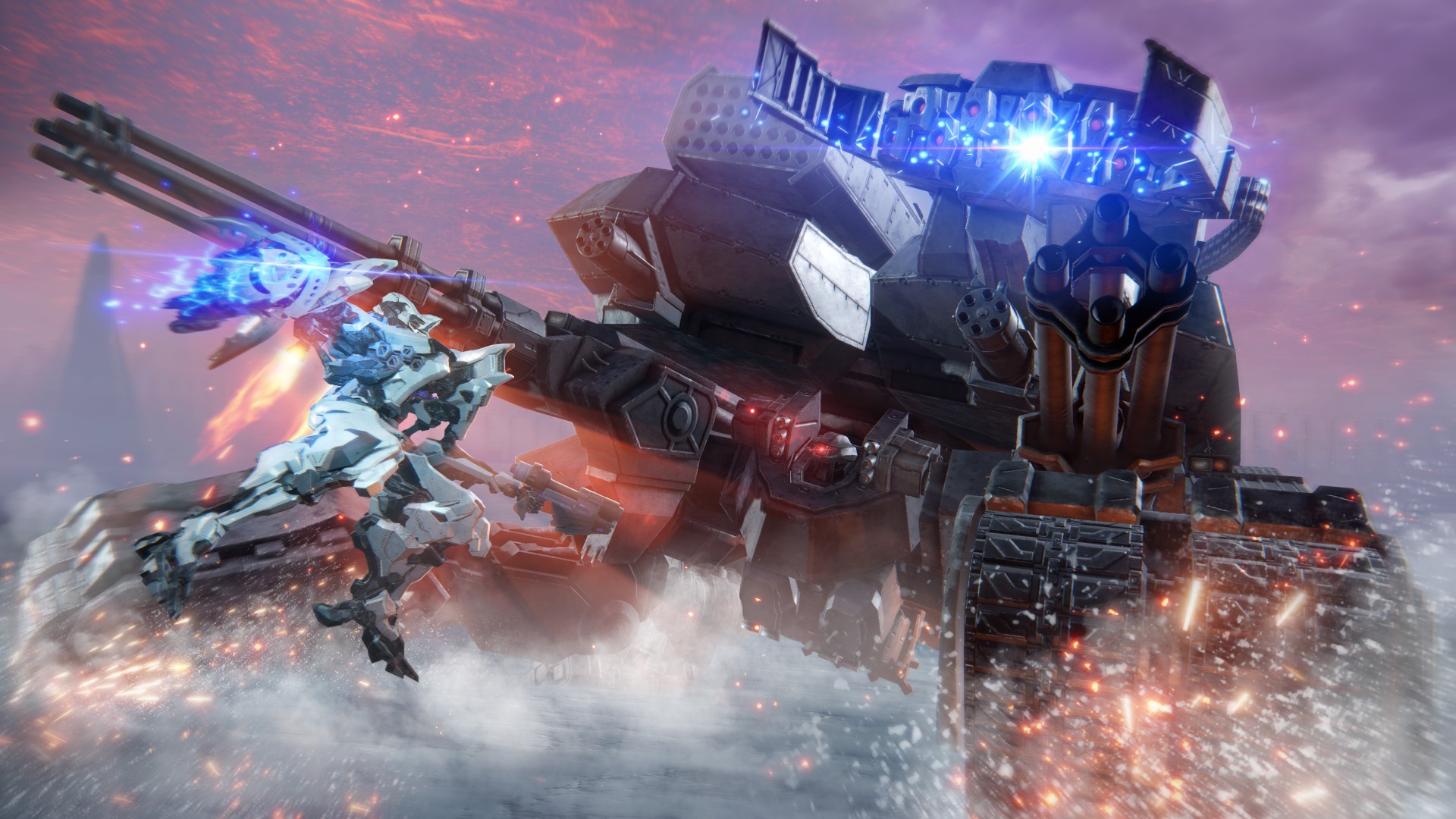
Speaking of bosses, variety in this regard is pretty low, it’s either a rival AC, or what ultimately boils down to a big metal box, with only one exception. It isn’t to say these fights aren’t fun, because at a baseline, AC is a total blast. They never wow’d me though, which is a real shame, especially with the pedigree of From Software. There aren’t any iconic encounters that can stand up to the likes of Artorias of the Abyss, or Ornstein & Smough. I would love to see From Software really let loose and get weird with it in a sequel or some new missions as DLC.
The AC bosses, whilst all awesome, with some sick callsigns, can almost all be dealt with in the same way. This meant that I didn’t feel all that intimidated when encountering a new pilot, even if I did think they looked pretty cool. Compounding this feeling, the action is so quick that you barely have a chance to really appreciate any of the aesthetics. Some of my favourite callsigns include, but are not limited to; Coldcall, Cinder and The Invincible Rummy.

There are loads of different options to take with combat too which I barely used, such as the long range ‘assault boost’ which takes the camera in close with an awesome camera angle and zooms your towards enemies to deliver a karate kick. I think that you can definitely fall into a trap with the combat loop of finding something which works, and sticking to it. Thankfully, the game is so damn satisfying to play, with each blow feeling crunchy and devastating, that it never really got old for me. Surely some of that comes down to the way my particular brain is wired, but combat became so trivial at points it was almost a meditative experience. A strange thing to say when you looked at the lunacy which was happening on screen.
The consistent beeping when fighting a regiment of rocket launcher enemies can sometimes be deafening. You’re always being locked onto, and don’t you forget it.
We can rebuild him
If you fail, you have the option to change your AC and adapt to the challenges mid-mission, which is awesome. It feels incredibly satisfying to overcome a challenging boss encounter through brains rather than brawn. You obviously still need the skills to execute your plan, but if you have a plan, the execution can be far more forgiving. For instance, if you are against a boss with a large metal shell at the front, become faster and more nimble, get round the back faster than they can turn and wail on that weak point. Up against a flame spewing behemoth? Get your fireproof hull on, and take them head-on.

Once you hit new game+, then you can really start having fun. You should have enough money to build multiple ACs to match your mood, so creativity is the name of the game here. I’ve been having a blast going through and clearing early missions quickly and ruthlessly, employing surgical precision like some kind of galvanised John Wick.
Worth noting also that new game+ contains many secrets for those willing to go through the game multiple times, there are unique missions, encounters and endings to discover so I would definitely recommend that. Some of the coolest things are hidden behind not one, but two rolls of the final credits.
Visuals and style
Another thing about Armored Core – it’s so cool. Like, so, so cool. The art direction, whilst a little sterile, is exactly what you’d expect from a mech game. Lots of beeps and boops, bright blue HUDs, “temperature critical” warnings, etc.. graphically it is no slouch either, you can’t argue that the environments, whilst often bland, do look great. There is one mission in particular where you are taking on fleets of spaceships in low orbit and it looks nothing short of epic.
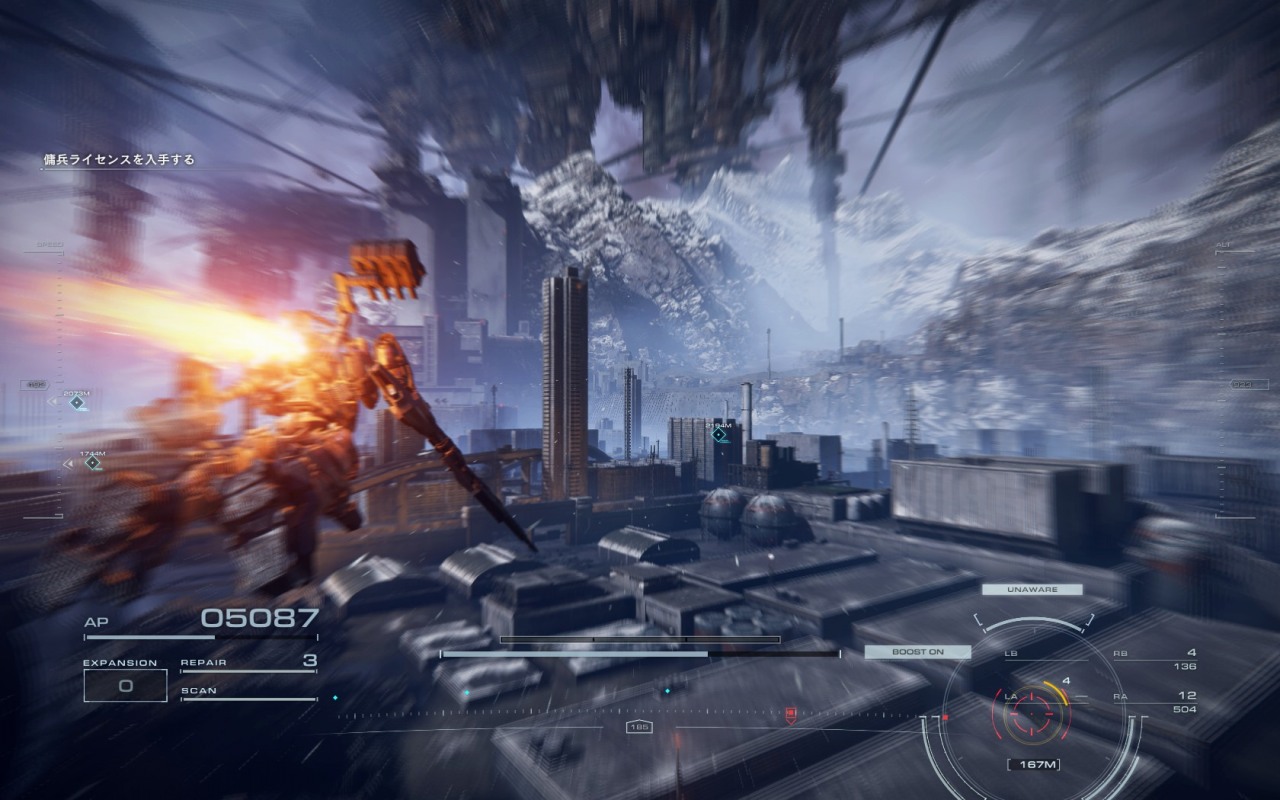
I’m especially fond of the flame, smoke and steam effects around the thrusters of your craft. I love how when you land on solid ground there is a huge exhale from the vents of your AC, so badass. They really make it feel like a heavy war machine that needs to do significant damage to the ozone layer to get moving.
Final thoughts
Armored Core 6 might just be the best mech game ever made. For me, at least. Everything which is cool about the mecha genre is found here present and correct, however it never becomes overwhelming or a chore to manage. There are certainly mech games out there which lean into the nerdiness, looking at you Steel Battalion. From Software have created the best middle ground possible, allowing you to enjoy the lightning fast combat of Zone of the Enders whilst also indulging in the customisation of Custom Robo Arena.
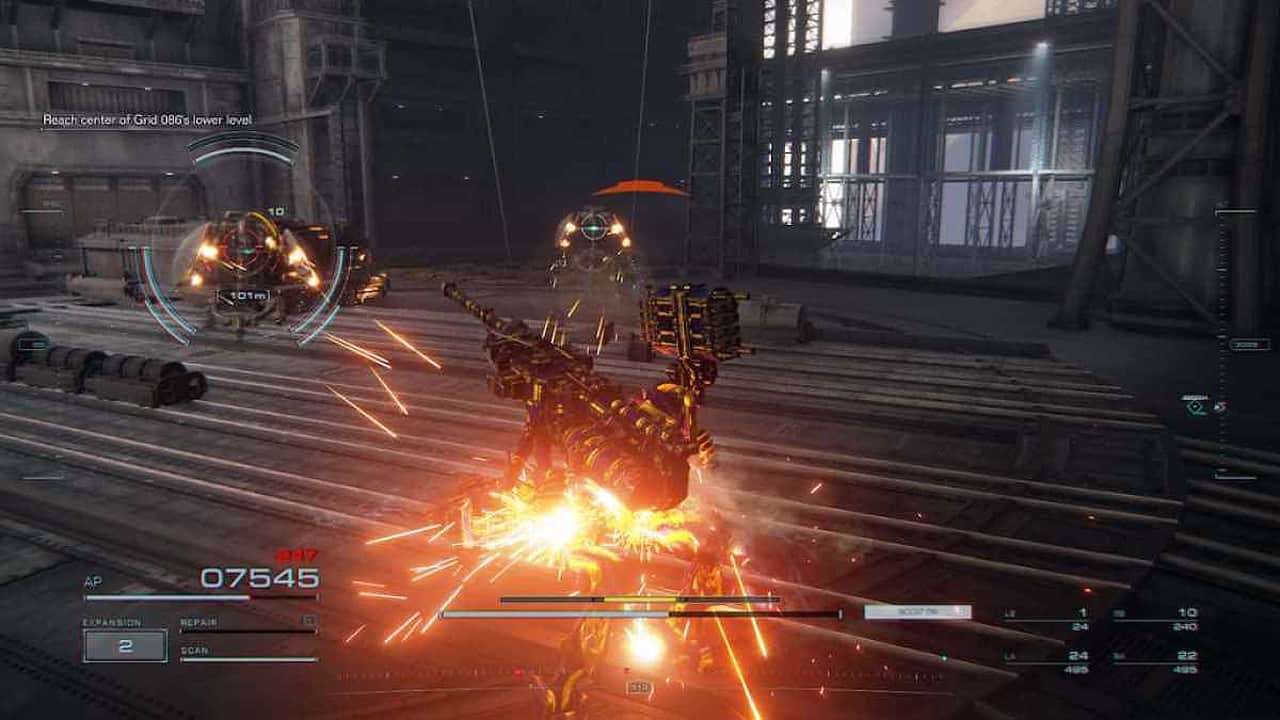
Whatever shortcomings I have discussed here do quickly melt away when you get your hands on the sticks and begin jet boosting around. If you are at least a little curious about this genre, you owe it to yourself to give this a go, there is no greater exemplification of how cool it can be to make some robots fight.
I really hope From Software builds upon the sturdy, quadruped legs they have established by revisiting this IP, supercharging it with even more badass armaments in a future sequel. Whenever they need me to pilot an AC, I’m here to answer the call, tell me to “get in the robot”.
 Lap Full of Crumbs