

As I stare at my shelf full of excellent board games, populated with the likes of Camel Up, Diamant, Cockroach Poker, Fungi, and many, many more. I find myself wondering why my partner and I recently have much preferred going to our PS5 to play Wingspan, rather than pull a bigger box off the shelf and set up.

Digital versions of traditional board games have been on the rise, with some great examples being the aforementioned Wingspan, Clank and even something as complex as Gloomhaven. That is not to mention the classics which have already been digitised like Uno, Monopoly and Ticket to Ride.
Tabletop Simulator has also been a great conduit for this, facilitating online play, allowing me to play Azul with friends who live all the way down in London if I wanted to. I would also be remiss not to give some props to Jackbox, a series which has expertly translated the feeling of a board game to the big screen, cementing itself as a party staple alongside Mario Kart and other classics.
It is clear that there are merits to both mediums, however, digital versions of traditional board games seem to be more popular than ever, and for good reason. I want to dive into what gets me excited about having these board games even more accessible, but also what makes me lament the “good old days” of tabletop gaming.
Pros
The set up
The first point in digital versions’ favour is the act of setting up. In some cases, this can be a daunting and laborious task, however, with our console version of Wingspan, it can be done in seconds. Digital versions provide seamless set up, no dealing out cards, no setting up boards, no separation of awkward trinkets between players. Heck, even clearing the coffee table, or migrating to the dining room adds a seemingly insurmountable barrier to even beginning to play a board game.

Maybe best of all though, when you’re done, you don’t even need to tidy up. Gone is the challenge to fit the contents back into the same box in an organised manner. Gone is the precarious meta game of Jenga, putting the box back onto your shelf and hoping that everything doesn’t fall off. Gone is the pain of finding a single coin from the night before under your sofa and realising that box is now on the bottom of the pile.
“The Teach”
This is easily the most nerve-wracking part of hosting a games night.
We’ve all been there. You have a new board game that you’re excited to play. You’re eager to have a blast and get everyone else as thrilled as you are with the various trinkets you’ve laid out on the coffee table. This is it. Your one shot. Your one opportunity. Nail this and it might be a go-to for countless game nights to come, but if you botch it, it’ll return to the shelf to gather dust, never to be opened again.

Okay, perhaps a little dramatic, but it really is the hope/dread I feel when teaching a new board game to my friends.
Digital versions of games, most at least, remove this burden entirely. Some, like Jackbox titles, provide short tutorials which are usually no longer than a minute or so. These digital tutorials and explainer videos are usually a brief way to explain everything you need to begin having fun and that is a huge advantage for someone as awkward as myself.
Handling of rules
When playing board games on console, you no longer have to deal with the mental load of parsing all rules and outcomes. It also means you don’t have to punish those new players who may step outside the bounds of fair play.
As the one who knows the rules of a physical board game, you’re the umpire – the judge, the jury and the executioner. In this case, what you’re executing isn’t some 18th century pickpocket, it is the fun of the game you’re trying to get your group of friends to enjoy. Handling games digitally, you no longer have to fear interjecting with a “oh, you actually can’t do that” and ruining a new players’ well-conceived plan. The console becomes the enemy in this case, you’re not the one limiting the fun a player gets to have, instead, it is the parameters of the game itself.

It also means that you can never be questioned on these rules. When someone asks “really?”, I feel like I’m entering a court of law. You better know this rulebook inside and out, subsection by subsection. Maybe that says more about my group of friends than anything else, but it can become quite heated. However, digitally, the answer is there, the binary nature of the programming behind the scenes makes this word the law, and like all machines, they cannot be reasoned with.
They can look nice, with swanky animations and stuff
Once again using Wingspan as the example here, it just looks so cosy. Using the medium to its full advantage, digital versions of games are able to foster the environment intended by the original designers.
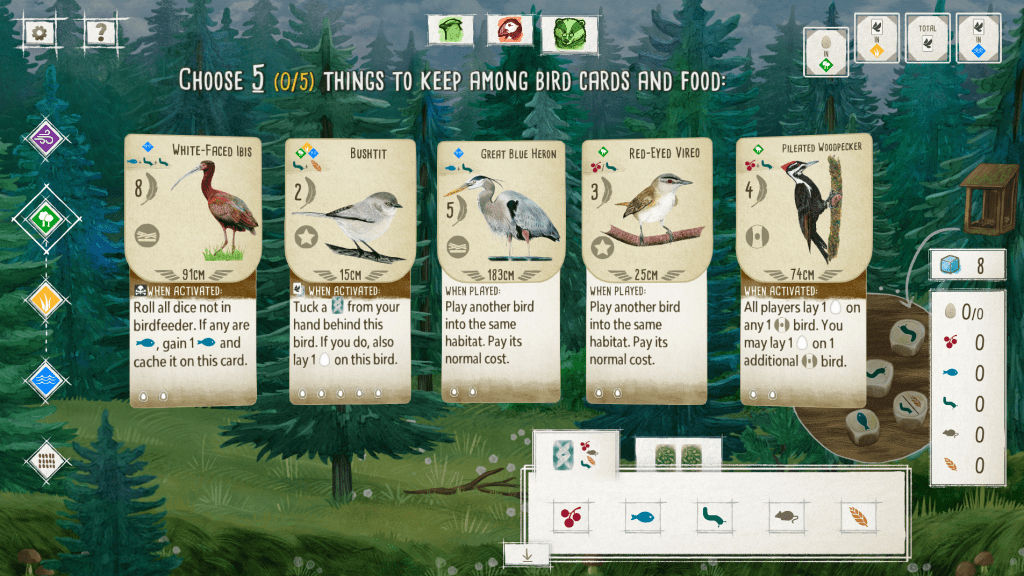
By aligning with the music, art and animations, the digital version of Wingspan can much more easily transport you into the great outdoors. It accomplishes more than most tabletop games, removing the reliance on the player to create this atmosphere for themselves, digital versions thrust this onto all players, and is essential if you interact with the game at all.
Online play
Another boon of the digital format for these games would have to be the online play functionality. As an avid board gamer, there is no greater barrier to playing than the cluttered, incompatible schedules of several fully grown adults. Online play negates this a little bit, by not requiring you and your friends to be physically together. It does however still require you to have the time carved out of your day, something which is increasingly rare as you enter your 30s.

An alternative here is to just play with randoms online, but this flies in the spirit of board games, or rather what I deem them to be. If you can extract joy in this way, more power to you, but I don’t think it is quite for me.
No ‘point salad’
Have you ever finished a game, only to have someone pull out a pen and paper, to count up how well you actually did over the last hour or so? It can be a pretty deflating end to what would’ve otherwise been an epic skirmish, as one player unceremoniously announced the winner and the rest of the table groans.
Digital versions of board games forgo the need for such manual work like this, and often present the usual tedium of point salad into something a little more exciting. For instance, the digital version of Wingspan tallies up all player scores, bit by bit, placing you along a track as a counter chimes into a higher and higher pitch. This means all players are engaged until the final winner breaks out from the pack and is announced as the victor. It’s a small touch, but one which takes any manner of brain power out of player hands, further lowering the barrier to entry.
Digital games typically move a lot quicker, with automated actions
Whilst we are on the topic of efficiency, this is an area where digital variants far excel when pitted against their physical counterparts. Having values be automatically counted removes any human error from the equation, and is instantaneous. No awkward pauses in the flow of the game, only decisions which need to be made. Essentially, digital editions allow you to focus on what makes each game fun, taking away all of the head scratching and mental arithmetic which may plague those larger boxes sitting on your shelf.
Cons
I just like collecting them
The first point I can make in favour of the physical, tabletop editions of any board games is pretty simple. Unfortunately I have a brain which is wired in such a way that I just like collecting board games. I think they look nice on my shelf and I like perusing them when friends come over, even if in the end we fall back on the old reliables which everyone knows and loves.
/cdn.vox-cdn.com/uploads/chorus_asset/file/9864863/20638973_857485767737096_2368717735323217739_n.jpg)
Each time you purchase a board game, I tend to think of it not as the purchase of the game itself, but the possibility of the game. I have games that I own which I’m so excited to play, but the chance has never presented itself. Just having it there on the shelf though, ready and waiting, is sometimes good enough for me though. Maybe that’s sad. Maybe I’m sad.
The vibes, the interpersonal connection
The most salient point I can make in favour of board games vs their digital counterparts is just “vibes”.
Playing a physical board game has much better vibes – when all players get involved, pried away from their screens, it is always so refreshing. The human connection from playing a tabletop game, in the same room, in the warm glow of the fire (or Netflix fireplace), is unmatched. Elite. Fantastic. Tranquil. There’s something so much more engaging about literally holding your cards close to your chest, rather than doing this just figuratively. Now at risk of sounding like an old man, I’ll leave you with one anecdote, and then move swiftly on.
I think back to a recent break I had with my partner in South Wales last October. Typically, this week consisted of hiking, pints at the local pubs, and rain, lots of rain. We stayed in a nice cosy lodge, sheltered within woodland, there is no way I could point to this place on a map. Anyway, every day we played a mushroom foraging game called Fungi. It was really special to me.
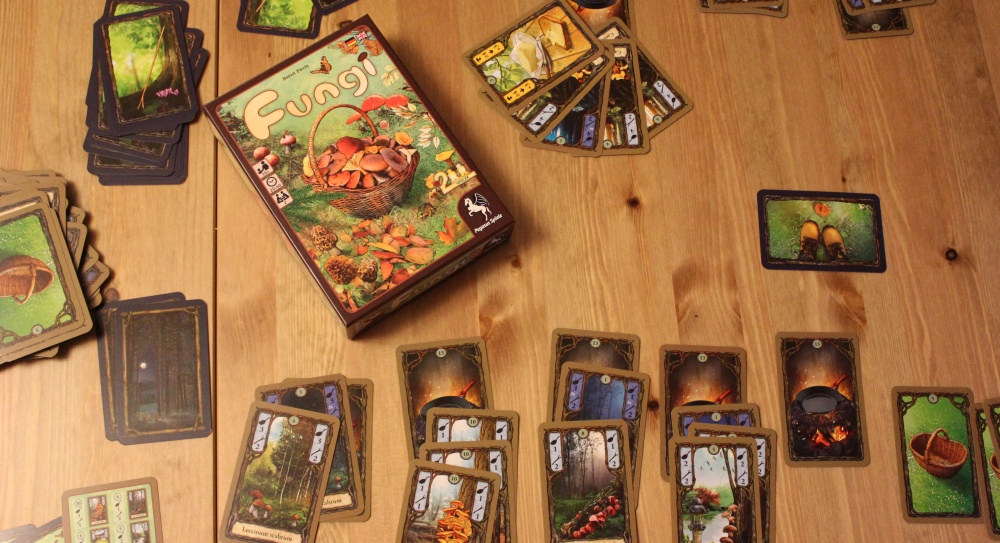
The setting perfectly matched the themes of the game. A warm lodge, rain pitter-pattering on the window beside me. Whilst the outside was ferocious in its inhospitality. Inside, we were blissfully unaware, exploring an endless forest, picking mushrooms and then cooking them in both cider and butter.
This is what I mean. Board games create vibes which are wholly unique to the medium. Providing the perfect way for you to detox from your screen.
The portability
Introducing new games to friends and bringing new ones home to play with family at Christmas is one of the great joys of the board gaming hobby. It is nowhere near as inviting to me however, if it requires me to lug £500 worth of hardware in the back of my car first, not mention the set up when I reach the other side.
The portability of some games is what makes them so great, taking a game like Scout anywhere with you is so easy. It fits into my bum bag if I need it to, and that’s awesome. Whenever my friends and I head off to an AirBnB somewhere for a long weekend, I’ll always bring a Bag For Life full of random games I have acquired and pitch whatever suits the mood.
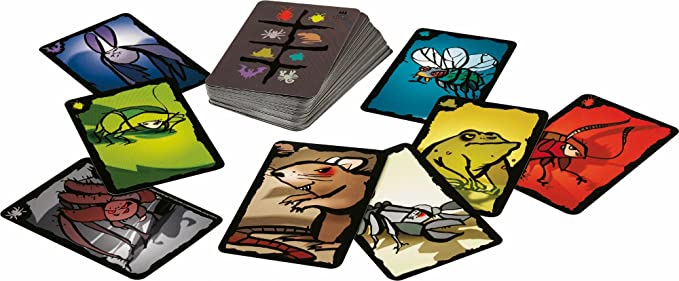
I can take Cockroach Poker to the pub. Can I take my version of Uno that I purchased on the PlayStation Store? Absolutely not.
No ‘house rules’ variants are available within digital versions
A smaller disadvantage of using a digital version of a game you already know is that you are unable to modify it in any way. If there are some aspects you don’t like or would like to ignore, with a digital version it is unlikely that you could omit these from your game. Because of this, the entire idea of ‘house rules’ isn’t possible. Not a huge deal if you play like the designers intended, but I know that some players do like to modify their own experience.
So, when is one version better?
Some board games aren’t as easily recreated through the medium of a games console though. For example, dexterity games like Flick ‘Em Up or a social deduction game like A Fake Artist Goes to New York lose all of their lustre or become unplayable in the transition to this new medium.
This means, in conjunction with varying degrees of development on digital platforms, there is no one-size-fits all. Each has its merits, and each succeeds and fails on an individual case basis, not by the medium as a whole.
Generally however, I would choose the digital versions of these games given the choice, at least to begin learning with a group. Once the group has a grasp of the mechanics we can move into the physical realm, investing in that likely pricey board game for your collection. I think this ultimately comes down to my anxiety when introducing rules to a group, and not being that great at explaining why a game is supposed to be fun. That being said, one of the great joys of the hobby is when the game lands with a player, and like a light switch, they’re in, and you can tell.
I want nothing more than to share what I think is cool with those I hold dear, and having a new medium in order to translate this is always a good thing. I hope this adoption of digital versions continues to introduce new players into the hobby of tabletop games. The more people who love this medium, the better games will be for everyone.
 Lap Full of Crumbs